Turf in Central Mississippi does not take the winter off, and that one fact changes how commercial landscape maintenance services in Clinton, MS have to be scoped.
A contract written on a northern template assumes a dormant season that lets a crew catch up. Here the growing season runs long enough that whatever slips in April is still slipping in October.
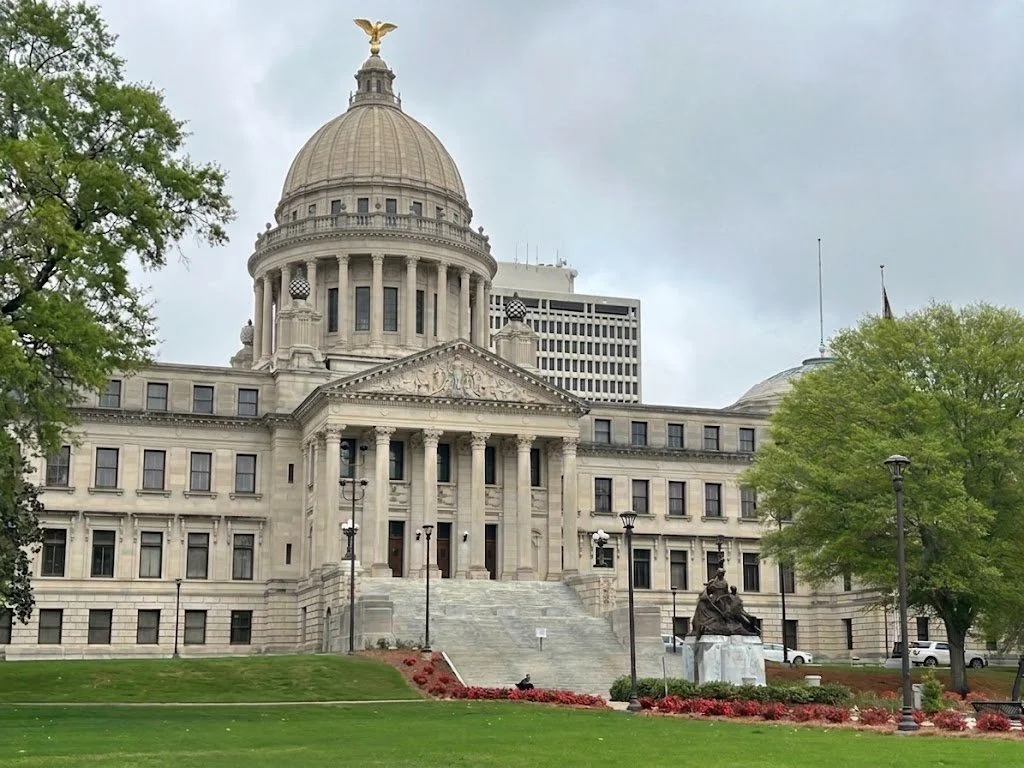
SchoggenScapes has served Central Mississippi for 25 years under the same two brothers who started it, and today our crews maintain properties ranging from office parks and HOAs to the grounds of the Mississippi State Capitol.
Turf care, bed care, irrigation, mowing, strawing and pruning all run 12 months a year, but they do not share a calendar evenly. Scoping them as one flat monthly visit is where most commercial agreements go wrong.
How Long Is the Mowing Season on a Mississippi Commercial Property?
The mowing season on a Central Mississippi property is long enough that mowing frequency, rather than mowing itself, becomes the real cost driver.
Warm-season turf here grows hard from spring into autumn and keeps going at a reduced rate well beyond where a northern property would have stopped.
A scope that counts visits annually rather than weekly tends to run short by late summer, which is precisely when an office park or retail center is most visible. Stating frequency by season keeps the late-summer shortfall from becoming a midyear dispute.
Why Does Bed Care Take More Work Than the Lawn on a Mississippi Property?
Bed care takes more work than the lawn because beds are where the heat and humidity show first. Weeds germinate across a longer window, mulch and pine straw break down faster, and shrubs put on growth that needs pruning more than once a season.
Our commercial maintenance accounts carry bed care, pruning and pine straw as named recurring items rather than as something folded into a mowing visit. That keeps each one on its own schedule and makes it obvious in the agreement when each is due.
What Does Seasonal Color Commit a Commercial Property To?
Seasonal color commits a commercial property to regular rotations and to the watering that keeps each planting alive between them. It is the most noticed element on a commercial frontage and the quickest to look neglected.
A property that wants color at the entrance is committing to several changeovers a year. It is also committing to irrigation that reaches those beds reliably through a Mississippi August, which is why color and irrigation belong in the same conversation.
How Should Irrigation Sit Inside a Commercial Maintenance Agreement?
Irrigation should sit inside the maintenance agreement, close to the crews already on site, because they are the ones who notice a dry zone or a head throwing onto pavement. Separating irrigation from maintenance puts a week between the symptom and the fix.
We carry irrigation alongside turf and bed care so that a crew already on the property can act on what they find instead of reporting it onward. Turf and bed problems that read as maintenance failures are often irrigation problems underneath.
What Should a Property Manager Compare Between Commercial Maintenance Bids?
A property manager should compare visit frequency and what sits outside the base scope. Two bids that look far apart are often quoting different numbers of visits, and two that look identical often differ on the treatment of pruning, pine straw and color rotations.
Ask each bidder to state visits per month by season. That single question usually explains the difference between two numbers faster than a line-by-line review.
Who Is Accountable When Commercial Grounds Maintenance Slips?
Accountability is clearest when one contractor holds the whole property. On a site split across several vendors, every party can point at another, and the manager absorbs the gap.
That is why we take full-service accounts rather than partial scopes, with crews on the same property on the same day each week.
On high-visibility grounds such as the State Capitol, keeping anything from slipping unnoticed is most of the job.
Review Your Grounds Scope for a Mississippi Season
If your grounds agreement was written around a shorter growing season, it is probably under-scoped for late summer. Commercial walk-throughs are at no cost, and we will put together a proposal built around how your property actually grows.
Schedule a commercial maintenance walk-through with SchoggenScapes.
In Summary
How many mowing visits should a commercial property in Central Mississippi expect?
Mowing frequency on a Central Mississippi property should be quoted by season rather than as a flat annual figure, with the heaviest interval through the warm months and a reduced one at either end. A bid that gives a single annual number is usually hiding where the reductions fall.
Is pine straw part of a standard maintenance scope?
Pine straw should be named explicitly in any commercial agreement, because it is a recurring refresh on Central Mississippi properties rather than a one-off install. SchoggenScapes includes strawing in its full-service commercial maintenance, and its treatment in the base scope is one of the most common differences between two otherwise similar bids.
Can a commercial grounds contract be adjusted midyear?
A commercial grounds contract can usually be adjusted midyear, and late summer is when it most often becomes necessary, as a property finds the scope running short against a season that has not slowed. Adjusting frequency or adding a bed care rotation is simpler than renegotiating the whole agreement.